Showing posts with label expat bangkok. Show all posts

2014-11-25

Bliston Arranged Annual Party to Celebrate ‘Loi Krathong Festival’ in AEC Theme

Bliston Suwan Park View arranged their annual party to celebrate the beautiful ‘Loi Krathong Festival’ on Friday 31 October 2014.


 The Bliston Loi Krathong Party has been organizing every year since 2008, the main propose is to thank you its own in-house guests as well as corporate customers. The second purpose is to create collaboration of staff between each department.

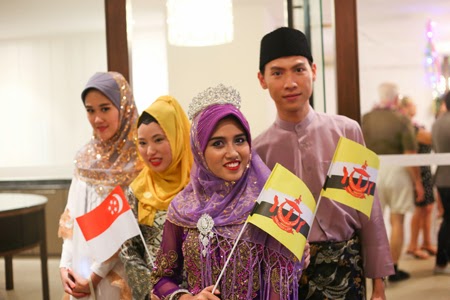
About a month before the event date, all departments were gathered to brainstorm for the theme of the event. It has to be something new, creative, yet fun. For the past years, we had arranged this event in Traditional Thai, Retro, and Looktung themes. This year, we went extra mile and looked ahead to welcome the AEC - that will officially start in late 2015.


On the event date, all staff and our guests were showing up in gorgeous traditional costumes of the AEC nations. The night started by the beautiful Salsa dance show from Dance Synergy Studio (located on the 5fl. of our residence) followed by AEC Fashion Show from our staff.


 During waiting for the lucky draw and the Loi Krathong activity to be held, some of the guests enjoyed delicacy Thai foods ea. Chicken Rice, Fish Maw Soup, Grill Squid, Golden Fried Fish Balls and Change Beer. While some enjoyed challenging themselves by fun games at our game booths.


Later that night, our GM. Mr. Kijja Laowsuwan announced numerous of lucky draw prizes, sponsored by Bliston and our partners ea. Artur Restaurant, Dance Synergy Studio, Na GaYa, Co Van Kassel Tour, Siam Ocean World and Madame Tussauds Thailand. After that the staff leaded all the guests to join Loi Krathong activity together at our pool that has been beautifully decorated by a big Krathong and AEC flags. The nigh was covered by smiles, laugh, and joy.

Until we meet again!

Bliston Society Team

2013-08-28

Suvarnabhumi Named 5th Best Airport in Asia's Largest Cities


Suvarnabhumi Airport, Bangkok was ranked fifth in a list of Asia’s best airports, according to an Agoda.com customer survey released recently.

Travellers were asked to rate 15 airports in Asia – Bangkok, Beijing, Ho Chi Minh City, Hong Kong, Jakarta, Kuala Lumpur, Manila, New Delhi, Phnom Penh, Seoul, Singapore, Taipei, Tokyo, Vientiane and Yangon. The rating, on a scale of 1 (poor) to 5 (excellent), was based on more than 11,000 respondents.

Suvarnabhumi won a score of 3.79, trailing Singapore’s Changi International Airport (4.37), Hong Kong International Airport (4.13), Seoul Incheon International Airport (4.01) and Delhi’s Indira Gandhi International Airport (4).


In fifth spot, Suvarnabhumi Airport handled 48 million passengers in 2012 after opening in 2006. As one of the most centrally located airports in Asia, it is a major transit and cargo hub and, interestingly, has the tallest control tower of any airport in the world.

Changi Airport came in first. Known for its hyper-efficiency and consistent investments in improvements and upgrades, it features in the top three of nearly every airport ranking in the world. Last year, Changi handled 51 million passengers. 

Second spot with a rating of 4.13 went to Hong Kong International Airport, which, similar to Changi, usually places very high on any ranking thanks to its convenient transit links and high-technology design on a huge chunk of reclaimed land in the South China Sea. Last year Hong Kong Airport handled 56 million passengers.

Rounding out the top three is Seoul's Incheon International Airport, which handled 39 million passengers last year. Interestingly, the airport holds a record that is now unbreakable - it was named the Best Airport Worldwide by the Airports Council International for a record seven years (2005-2011), and the award was discontinued after its final win. 


Top 10 Airport Rankings in Asia's Largest Cities 

1. Changi International Airport 4.37
2. Hong Kong International Airport 4.13
3. Seoul Incheon International Airport 4.01
4. Indira Gandhi International Airport 4.00
5. Suvarnabhumi Airport 3.79
6. Narita International Airport 3.69
7. Kuala Lumpur International Airport 3.56
8. Beijing Capital International Airport 3.48
9. Taiwan Taoyuan International Airport 3.38
10. Phnom Penh International Airport 3.14


cr: www.nationmultimedia.com


Images of Suvarnabhumi Airport:

Have you visited any of these airports and what do you think? :)

2013-08-02

Find Your Ideal Expat Home in Bangkok

You’ve landed your dream job, now all you need to is track down the perfect home. But don’t worry, finding the right condo, apartment or house in the capital is a fairly simple process...


Moving to Bangkok to take up a new job is a challenging experience and one of the most important tasks is to find somewhere to live. This is a reasonably straightforward process with a wide range of choices that match a range of budgets, but it is important to understand the range of options.

The first decision is going to be where to live. This will be determined by where you are going to work, if you have children and where they go to school, and your need for access to public transport, especially the BTS skytrain.

The most popular expatriate residential area is Sukhumvit Road between sois 1 and 63 (odd-numbered sois on the north side and sois 2 to 42 on the south side). This is followed by the Lumpini area between Ratchadamri and Soi Ruam Rudi, and the streets off Sathon Road north of the Narathiwat Ratchanakarin intersection.

There are a few suburban locations favoured by some expatriate families because of proximity to schools. These include Nitchada Thani next to the International school of Bangkok (ISB), and some developments near Bangkok Patana school on Soi La Salle in the eastern part of Bangkok.

Most expatriates coming to Bangkok will choose to rent rather than purchase. There is a wide choice of accommodation types for rent including serviced and unserviced apartments, condominiums, single detached houses and townhouses.

Serviced Apartments are single-ownership buildings that provide units for rent that are fully furnished and equipped with all the appliances, cutlery, crockery, linen and amenities one would need. Effectively you can move in with just your toothbrush. Most serviced apartments provide a regular cleaning service, so it feels like living in a hotel except you have more space and a kitchen. The most common unit types are studios and one-bedroom apartments with a range of sizes.

Tenants can rent serviced apartments on a monthly basis or for longer periods. These are ideal for expatriates on short-term assignments or for singles or couples who want the convenience of everything being provided and the service. The rents per square metre are higher than for other types of rental accommodation with a range of between 700 and 1,200 baht per square metre per month.


Apartments are single-ownership multi-unit buildings and condominiums are multi-ownership multi-unit buildings where units have been bought by individual owners. Physically there is little difference between apartments and condominiums. Generally, both are offered on a furnished basis with major appliances but without linen, cutlery, crockery and so on. Most condominiums and apartments have facilities such as swimming pools.

The main difference is in the way these buildings are managed. In an apartment building, one company owns all of the units and is responsible for maintenance and repairs inside the unit and the common areas. In a condominium, the property managers of the building are only responsible for the management of the common areas and the individual owner is responsible for maintenance and repairs inside the unit.

The length of a residential lease is generally one year with the tenant paying a deposit the equivalent to three months’ rent and paying rent monthly in advance. Tenants are responsible for paying utilities such as electricity, water, telephone, internet and cable TV, except for serviced apartments where generally they are included in the cost.

Contracts are generally short and straightforward. However, it is important that anything agreed orally between the landlord and the tenant should be included in writing in the agreement to avoid any future misunderstandings.

It is also important to have a proper handover where any existing defects are listed and agreed upon in writing by the landlord and tenant. This way, when it comes to handing the unit back at the end of the lease, there is no confusion about who was responsible for any damage, which could result in deductions from the deposit.

CR: Bangkok Post, 28 July 2013 by James Pitchon

2013-01-29

What Do & Don't on Chinese Lunar New Year Festival, Find out here!


Chinese Lunar New Year or Chinese Spring Festival holds the most significant position among all Chinese festivals and holidays. Its date is determined by the Chinese lunar calendar, which falls sometime from late January to early February and varies from year to year. 

::Do::

A Reunion Dinner
A reunion dinner  is held on New Year's Eve where members of the family gather for the celebration. The dinner is very large and sumptuous and traditionally includes dishes of meat and fish. Most reunion dinners also feature a communal hot pot as it is believed to signify the coming together of the family members for the meal. 

Red packets 
Red packets are passed out during the Chinese New Year's celebrations, from married couples or the elderly to unmarried juniors. It is also common for adults or young couples to give red packets to children. These packets often contain money in certain numbers that reflect good luck and honorability. 

Fireworks
The firecrackers are known for their deafening explosions that are thought to scare away evil spirits. The burning of firecrackers also signifies a joyful time of year and has become an integral aspect of Chinese New Year celebrations.

Red Clothing
Clothing mainly featuring the color red or bright colors is commonly worn throughout the Chinese New Year because it was once believed that red could scare away evil spirits and bad fortune. In addition, people typically wear new clothes from head to toe to symbolize a new beginning in the New Year.
 
::Don’t::

Put Odd Numbers of Money in the Red Packets
Red packets almost always contain money, usually varying from a couple of dollars to several hundred. Per custom, the amount of money in the red packets should be of even numbers, as odd numbers are associated with cash given during funerals.

Fires, Knives and Broom
Some consider lighting fires and using knives to be bad luck on New Year's Day, so all food to be consumed is cooked the days before. It is also considered bad luck to use the broom on this day.

Visiting People on the Third Day of Chinese New Year Festival
The third day is known as ChìkÇ’u, directly translated as "red mouth". Rural villagers continue the tradition of burning paper offerings over trash fires. It is considered an unlucky day to have guests or go visiting. Hakka villagers in rural Hong Kong in the 1960s called it the Day of the Poor Devil and believed everyone should stay at home.

Sour Orange
On the last day of the Chinese New Year festival, in Malaysia and Singapore, single women would write their contact number on mandarin oranges and throw it in a river or a lake while single men would collect them and eat the oranges. The taste is an indication of their possible love: sweet represents a good fate while sour represents a bad fate.

2012-08-10

Welcome to Bangkok...


Welcome to Bangkok. If you are coming to the Thai capital to live, work, or just visit, you’ll find there’s a lot going on in this dynamic and sometimes misunderstood metropolis…


Sukhumvit

Modern Mavels
Melting pot of thriving communities offers a diversity of cultures and attractions…

The area along and about Sukhumvit Road can be divided into Lower Sukhumvit (Soi 1-24), Middle Sukhumvit (Soi 26-71), and Upper Sukhumvit (above Soi 71).

One of Bangkok’s longest and most historical thoroughfares, famed for its blend of business, tourism and lifestyle traffic, Sukhumvit Road has it all – lifestyle shopping centres, major office buildings, parks, international schools and hospitals, health clubs, boutiques, countless nightlife offerings, quaint pubs, world-class restaurants, 24-hours supermarkets, and convenient public transport…

Things to do:
Shopping – Terminal 21, Emporium, Avenue, Gateway Ekkamai
Food and Drink – Bamboo, Sunrise Tacos, Long Table
Nightlife – Cheap Charlie’s, Bed Supperclub, Club Insomnia, The Sportsman Bar


Central Lumpini

Royal Touch
District offers fabulous restaurants and is idyllic for a Sunday afternoon stroll…

The area is bordered by Wireless Road, Phetchaburi Road, Rajdamri Road and Rama IV Road includes Langsuan Road, Chidlom Road, Ploenchit Road, Soi Ruamrudee, Sarasin Road, and Soi Mahatlek 1, 2 and 3.

Perhaps the most regal swathe of land in the entire city, this district is home to embassies, gated estates and Bangkok’s home of greenery – Lumpini Park. The parks to having an address in these confines are great green view, pleasant walks, and the feeling that you’ve made it…

Things to do:
Shopping – Central Chitlom, Gaysorn Plaza, Central World
Food and Drink – Artur Restaurant, Gianni Ristorante, Nippon Tei, Spice Market, Ngwan Lee Lang Suan
Nightlife – Falabella, Red Sky, Mixx, 70s Bar


Sathorn / Silom

Centre of Attraction
Thriving business hub ideal for those who like being where the action is…

The area along and about Sathorn and Silom roads highlights all the colour of Thai life. Sathorn Road can be devided into North Sathorn (between Rama IV Road and Narathiwat Road) and South Sathorn (between Narathiwat Road and Charoen Krung Road). Silom Road can be devided into Lower Silom (between Rama IV Road and Narathiwat Road) and Upper Silom (between Narathiwat Road and Charoen Krung Road).

Sathorn Road is a thriving business centre and home to office buildings, five-star hotels, and financial institutions. Residing here has its advantages as it is close to the silom business and entertainment district, hospitals (BNH, Bangkok Christian, Saint Louis), Lumpini Park, two MRT stations, four BTS stations, and Bus Rapid Transit (BRT) line. If you enjoy living in the thick of things, Silom is the place for you. There is always something going on here. Soi Saladaeng is charming, due in large part to the interplay between the established local community and the burgeoning expatriate one…

Things to do:
Shopping – Silom Night Market, Central Silom Complex, O.P. Place, River City Shopping Complex
Food and Drink – O’Reilly’s Irish Pub, Beirut, AOI
Nightlife – Vertigo, Zanotti Wine Bar, Tapas, Roadhouse BBQ

cr: Eric A. DiAdamo, At Your Service Southeast Asia
www.ays.scmp.com